
LVT and LVP Takeoffs for Commercial Flooring Bids
An LVT takeoff measures each luxury vinyl tile and plank area and converts it to cartons, using the product size, layout pattern and room shape to set waste. Straight-lay planks in large rooms need little extra; herringbone, chevron, diagonal and multi-product patterns need far more, and borders, feature strips and transitions become separate line items.
What drives LVT and LVP quantities?
| Driver | Why it matters |
|---|---|
| Plank or tile size | Long planks (for example 7" x 48" or 9" x 60") leave longer end offcuts than small tiles. |
| Layout pattern | Straight, random, ashlar, diagonal, herringbone and chevron each create a different waste rate. |
| Multiple products in one pattern | Mixed-width or multi-color patterns need each product counted separately. |
| Room size and shape | Small rooms and angled walls produce more unusable offcuts. |
| Borders and feature strips | Measured in linear feet and priced as separate items. |
| Carton coverage | Varies by product, so the same SF can mean a different carton count. |
How much waste should you add to LVT?
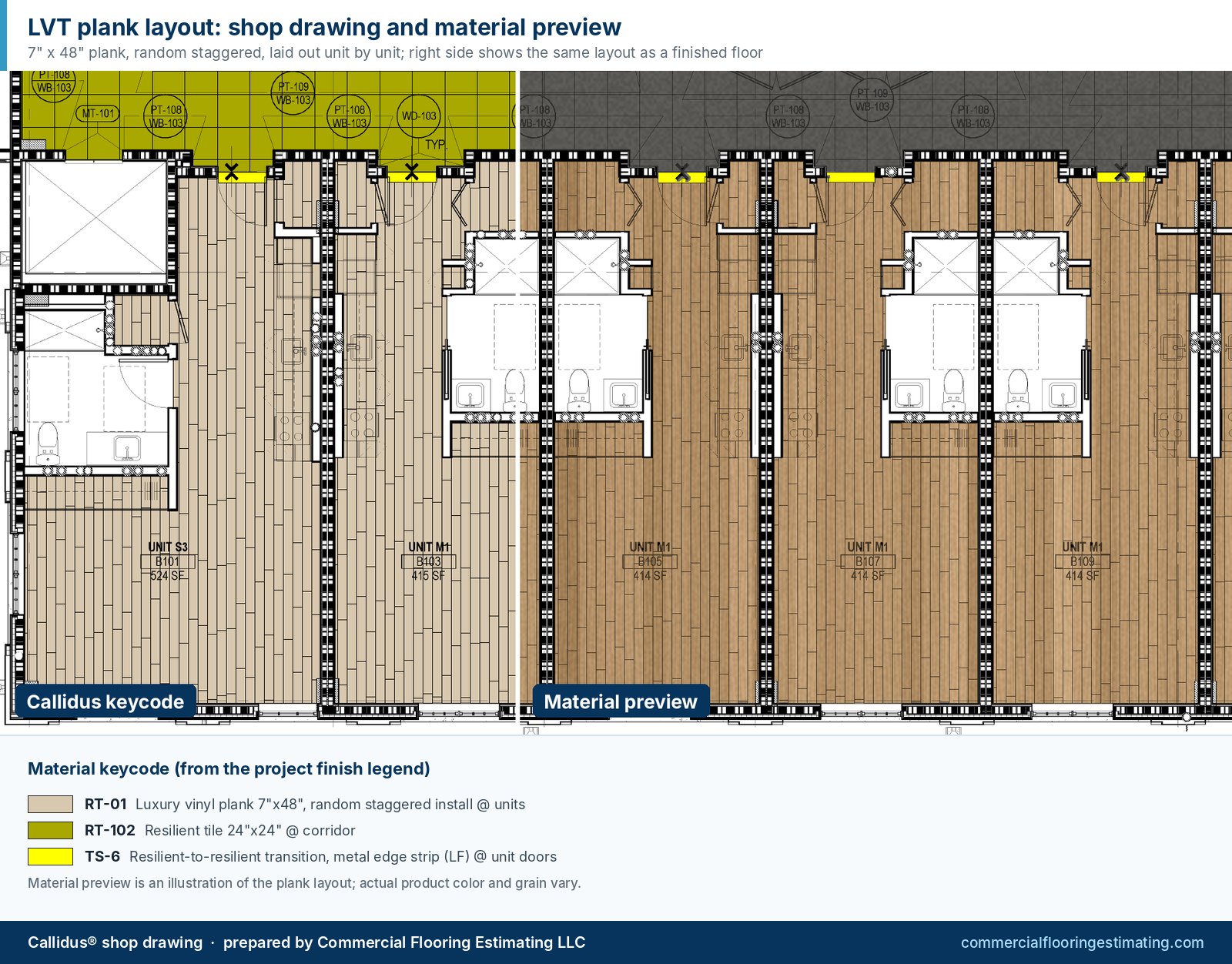
Straight-lay plank in open areas is often estimated in the 5–8% range, while diagonal layouts and small rooms push higher and herringbone or chevron can reach 15% or more. These are starting points only. A takeoff that lays out the actual pattern in each room is more accurate than applying one percentage to the whole job, which is how CFE builds LVT quantities in Callidus®.
Ranges are general industry rules of thumb, not a guarantee for any project. Confirm installation requirements with the manufacturer.
LVT in commercial specifications
Commercial LVT specifications often add requirements that affect the bid: a specific wear layer, a minimum acclimation period, moisture testing, a pressure-sensitive or high-strength adhesive, and attic stock. We note those items so they are visible when you price, and list moisture mitigation or underlayment as separate items when the documents include them.
What a CFE LVT takeoff includes
- Net SF per product, color and finish code
- Gross SF and carton count by layout pattern
- Separate quantities for borders, feature strips and inlays
- Transition strips and reducers in linear feet
- Wall base by type and height
- Keycoded plans showing pattern direction
Frequently Asked Questions
How do I calculate how many boxes of LVT I need?
Multiply the net square feet by one plus your waste factor, then divide by the carton coverage and round up. For example, 1,000 SF with 8% waste is 1,080 SF; at 24 SF per carton that is 45 cartons.
Does herringbone LVT need more material?
Yes. Every perimeter piece in a herringbone layout is an angled cut, so waste is much higher than straight lay. Many estimators start around 15% and adjust for room size.
Is LVT the same as LVP?
LVT (luxury vinyl tile) is the overall product category and often refers to square or rectangular tiles. LVP (luxury vinyl plank) refers to plank-shaped products. Both are estimated the same way, by layout and carton.
Can CFE estimate rigid core and dryback LVT?
Yes. We measure both. Glue-down dryback, loose-lay and rigid-core click products differ in accessories, underlayment and transitions, and we list those items separately.
Do LVT transitions get counted separately?
Yes. Transition strips and reducers are measured in linear feet at each change of finish and listed as their own line items, so they can be priced with the correct product.
Should LVT be estimated by the square foot or by the carton?
Measure in square feet, then convert the gross quantity to full cartons using the specified product's carton coverage. Ordering is always in whole cartons.
Need this takeoff done for your next bid?
Send your plans and specs. Most CFE takeoffs are completed within 24–48 business hours of receiving complete documents.

Written by
Cristian Valcu – Founder & CEO, Commercial Flooring Estimating LLC
Cristian Valcu is a U.S.-based commercial flooring estimator with over 20 years of experience estimating with Callidus software in the commercial flooring industry. He is an expert in reading and interpreting floor plans, specifications and project-related information, and in producing full takeoff reports with quality material takeoffs based on all available bid documents.
Last updated: