
VCT, SDT and ESD Flooring Takeoffs
A VCT takeoff measures each vinyl composition tile area by color and converts it to cartons, usually 45 square feet per carton for 12" x 12" tile. Multi-color patterns, checkerboards and borders are counted color by color. Static-dissipative (SDT) and ESD flooring add grounding strips, conductive adhesive and testing requirements that need their own line items.
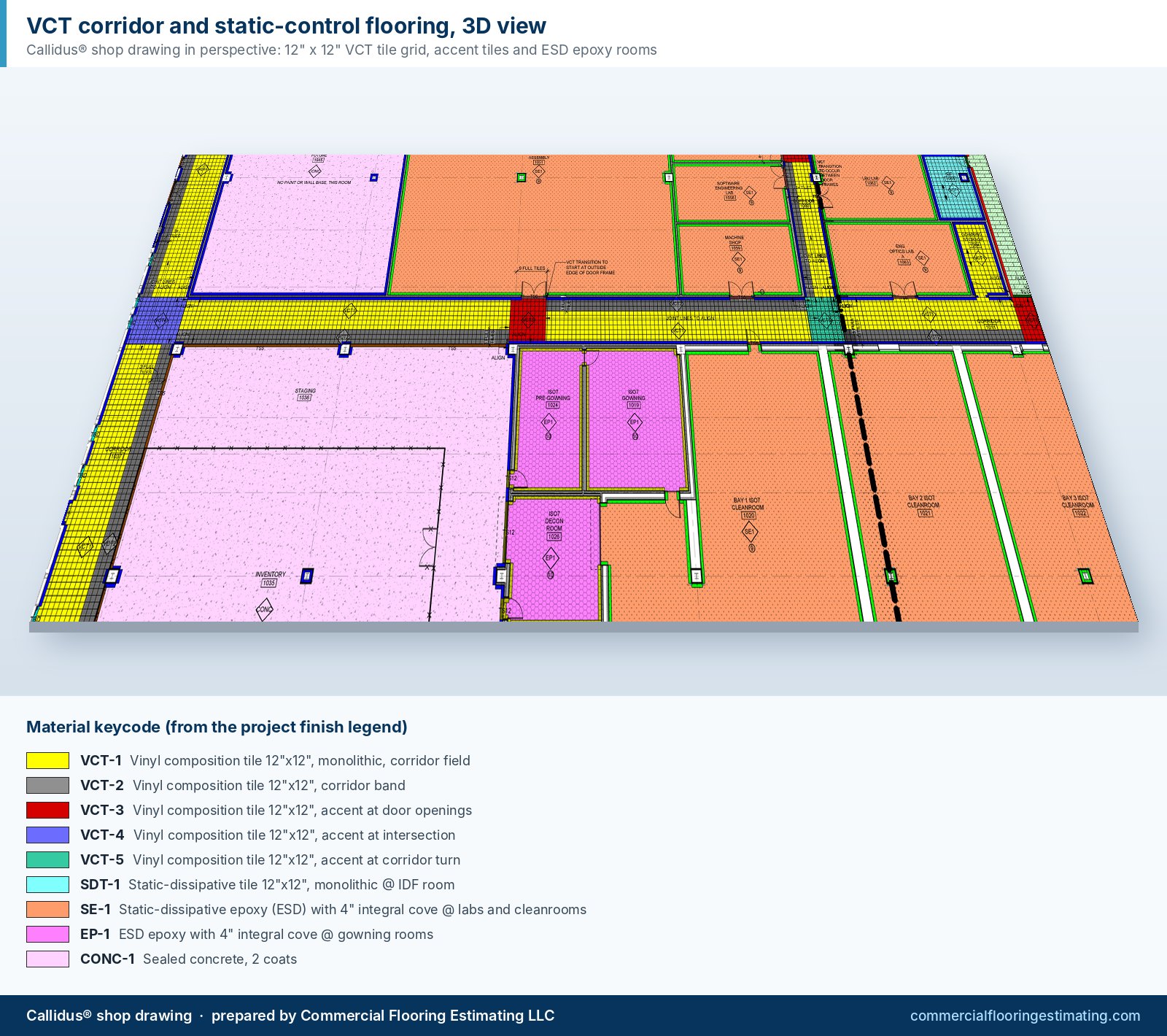
How is VCT estimated?
Standard commercial VCT is 12" x 12" x 1/8", commonly packed 45 tiles (45 SF) per carton. The takeoff measures each room's net area by color, adds waste for the layout, and rounds to full cartons for each color. Because VCT is cut easily and offcuts are small, waste on a plain single-color field is usually modest. The count gets more complex with patterns.
| Layout | What to count | Waste tendency |
|---|---|---|
| Single color field | Net SF of one color | Low |
| Random two- or three-color mix | Each color by its share of the mix | Low to moderate |
| Checkerboard or graphic pattern | Each color laid out by the pattern | Moderate |
| Borders and accent bands | Linear feet converted to tiles per color | Moderate to high |
| Diagonal layout | Full field with angled perimeter cuts | Higher |
Static-dissipative and ESD flooring
Static-control floors appear in hospitals, labs, data centers, electronics manufacturing and control rooms. Static-dissipative tile (SDT) and conductive ESD tile look similar to VCT but are installed with conductive adhesive and copper grounding strips, then tested for electrical resistance. A takeoff should list:
- Net and gross SF of SDT or ESD tile by product
- Copper grounding strip in linear feet and the number of ground connections, per the specification
- Conductive adhesive as a separate material
- Welded seams if the product is a sheet ESD floor
- Notes on testing and certification requirements to price
Where VCT is still common
VCT remains common in schools, retail back-of-house, healthcare support areas and corridors because it is durable and inexpensive. School projects often combine VCT with other floors in the same building; see our school flooring estimating page.
Frequently Asked Questions
How many square feet are in a box of VCT?
Standard 12" x 12" VCT is commonly packed 45 tiles per carton, which covers 45 square feet. Confirm the carton count on the specified product, since some products differ.
What waste factor is used for VCT?
Plain single-color VCT in large rooms often runs around 3–5%, while multi-color patterns, borders and diagonal layouts need more. Pattern layouts should be counted color by color.
What is the difference between SDT and ESD flooring?
Both control static electricity. Static-dissipative flooring slows the discharge of static, while conductive ESD flooring drains it faster and is used where electronics are very sensitive. Each has its own resistance range, adhesive and grounding requirements in the specification.
Do you count copper grounding strips for ESD floors?
Yes. Grounding strip length and connection points are listed separately, based on the specification and manufacturer's installation instructions.
How do you estimate a VCT checkerboard pattern?
Lay the pattern out room by room and count each color separately, including the partial tiles at the edges. A checkerboard is usually close to half of each color, but borders and room shapes change the split.
Is static-dissipative tile installed like regular VCT?
No. Static-dissipative and conductive tile need conductive adhesive, copper grounding strips connected to building ground, and resistance testing after installation, as listed in the specification.
Need this takeoff done for your next bid?
Send your plans and specs. Most CFE takeoffs are completed within 24–48 business hours of receiving complete documents.

Written by
Cristian Valcu – Founder & CEO, Commercial Flooring Estimating LLC
Cristian Valcu is a U.S.-based commercial flooring estimator with over 20 years of experience estimating with Callidus software in the commercial flooring industry. He is an expert in reading and interpreting floor plans, specifications and project-related information, and in producing full takeoff reports with quality material takeoffs based on all available bid documents.
Last updated: