Flooring Waste Factors for Commercial Bids, by Material
Commercial flooring waste typically runs 5–15%, depending on the material, room sizes and layout. Large open rooms with simple layouts sit at the low end; patterned carpet, herringbone or diagonal planks, narrow corridors and many small rooms sit at the high end. A roll or tile layout for each area is more accurate than one flat percentage.
Typical waste factors by material
| Flooring type | Typical starting range | What pushes it higher |
|---|---|---|
| Broadloom carpet | 8–15% | Pattern match, roll width vs. room width, pile direction |
| Carpet tile | 3–10% | Monolithic or ashlar install, planks, small rooms |
| LVT / LVP | 5–10% | Diagonal, herringbone or chevron patterns |
| VCT / SDT / ESD | 3–8% | Multi-color patterns, borders, diagonal layouts |
| Sheet vinyl / linoleum | 10–15% | Roll width, seam rules, flash cove |
| Rubber sheet and tile | 5–15% | Roll width, patterns, inlays |
| Resinous / polished concrete | No cutting waste | Material loss in mixing and texture, per manufacturer |
These are general starting points used across the industry, not guarantees for a specific project. Herringbone and chevron LVT can exceed 15%. Always adjust for the actual layout.
Why a flat percentage is risky
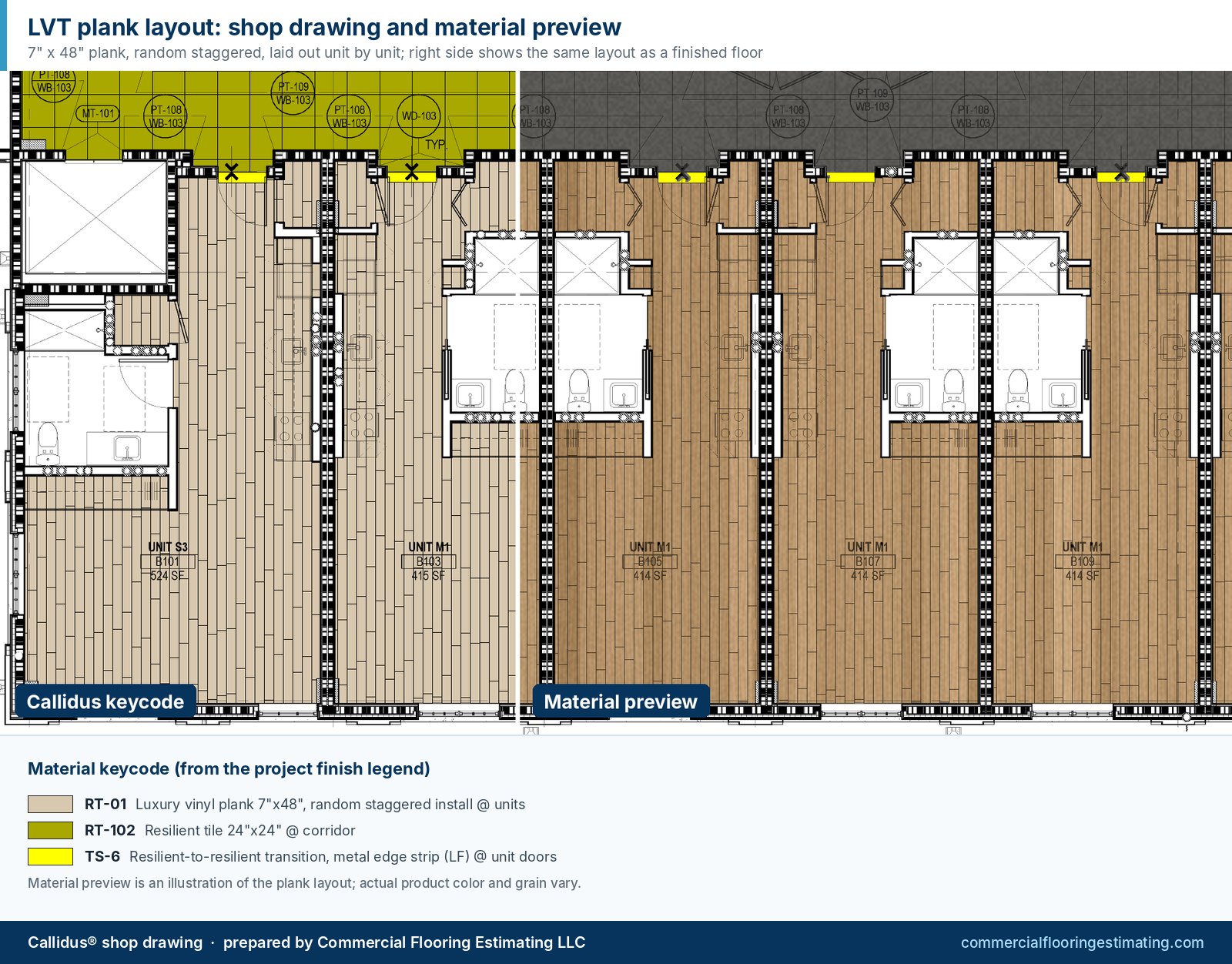
A flat 10% on a 20,000 SF carpet job is 2,000 SF of material. If the real layout needs 6%, you priced 800 SF you will not use and may lose the bid. If it needs 14%, you are 800 SF short and paying for a rush order. The only way to know is to lay out the material in each area. That is what Callidus® does: it places each roll cut or tile pattern and reports the gross quantity directly.
What creates flooring waste?
- Roll width: a 14-foot room covered with 12-foot carpet needs a second cut, much of which may be unusable.
- Pattern repeat: each cut extends to the next full repeat so the pattern matches.
- Direction: directional products cannot be rotated to use offcuts.
- Room size: small rooms produce small offcuts that cannot be reused.
- Layout pattern: diagonal and herringbone create angled cuts at every edge.
- Seam rules: keeping seams out of doorways or traffic lanes can force extra cuts.
Waste, overage and attic stock
Keep three numbers separate: waste (material lost to cutting and layout), overage (rounding up to full cartons or rolls) and attic stock (extra material the owner keeps for repairs). Combining them hides what is really in your bid. See attic stock in flooring bids.
Try the numbers with our flooring waste calculator.
Frequently Asked Questions
What is a normal waste factor for flooring?
Most commercial flooring falls between about 5% and 15% waste. Simple layouts in large rooms are at the low end; patterned or directional materials, diagonal layouts and small rooms are at the high end.
How much extra carpet should I order?
For broadloom, the extra depends on roll width, room widths and pattern repeat. Many estimators start around 10% and adjust, but a seam layout gives the real figure.
Is waste the same as attic stock?
No. Waste is material lost during installation. Attic stock is extra, uninstalled material left with the owner for future repairs. They should be separate lines in a bid.
Why is herringbone waste so high?
Every piece that meets a wall in a herringbone layout is cut at an angle, and many offcuts cannot be reused, so waste often exceeds 15%.
Does a larger room have less flooring waste?
Generally yes. Large open rooms let offcuts be reused and need fewer edge cuts, while small rooms, closets and corridors produce more unusable pieces.
Is flooring waste the same for every installer?
No. Layout skill, how carefully offcuts are reused and site conditions all affect real waste, which is why a measured layout is a better basis than a single percentage.
Need this takeoff done for your next bid?
Send your plans and specs. Most CFE takeoffs are completed within 24–48 business hours of receiving complete documents.

Written by
Cristian Valcu – Founder & CEO, Commercial Flooring Estimating LLC
Cristian Valcu is a U.S.-based commercial flooring estimator with over 20 years of experience estimating with Callidus software in the commercial flooring industry. He is an expert in reading and interpreting floor plans, specifications and project-related information, and in producing full takeoff reports with quality material takeoffs based on all available bid documents.
Last updated: