Rubber Flooring Estimating: Sheet, Tile and Stairs
Rubber flooring estimating covers three different measurements: sheet or tile on floors (square feet), stair treads, risers and nosings (counted per stair and by width), and rubber base and transitions (linear feet). Sheet rubber needs a roll layout because rolls are narrow, while treads must be counted by stair width and matched to the manufacturer's available lengths.
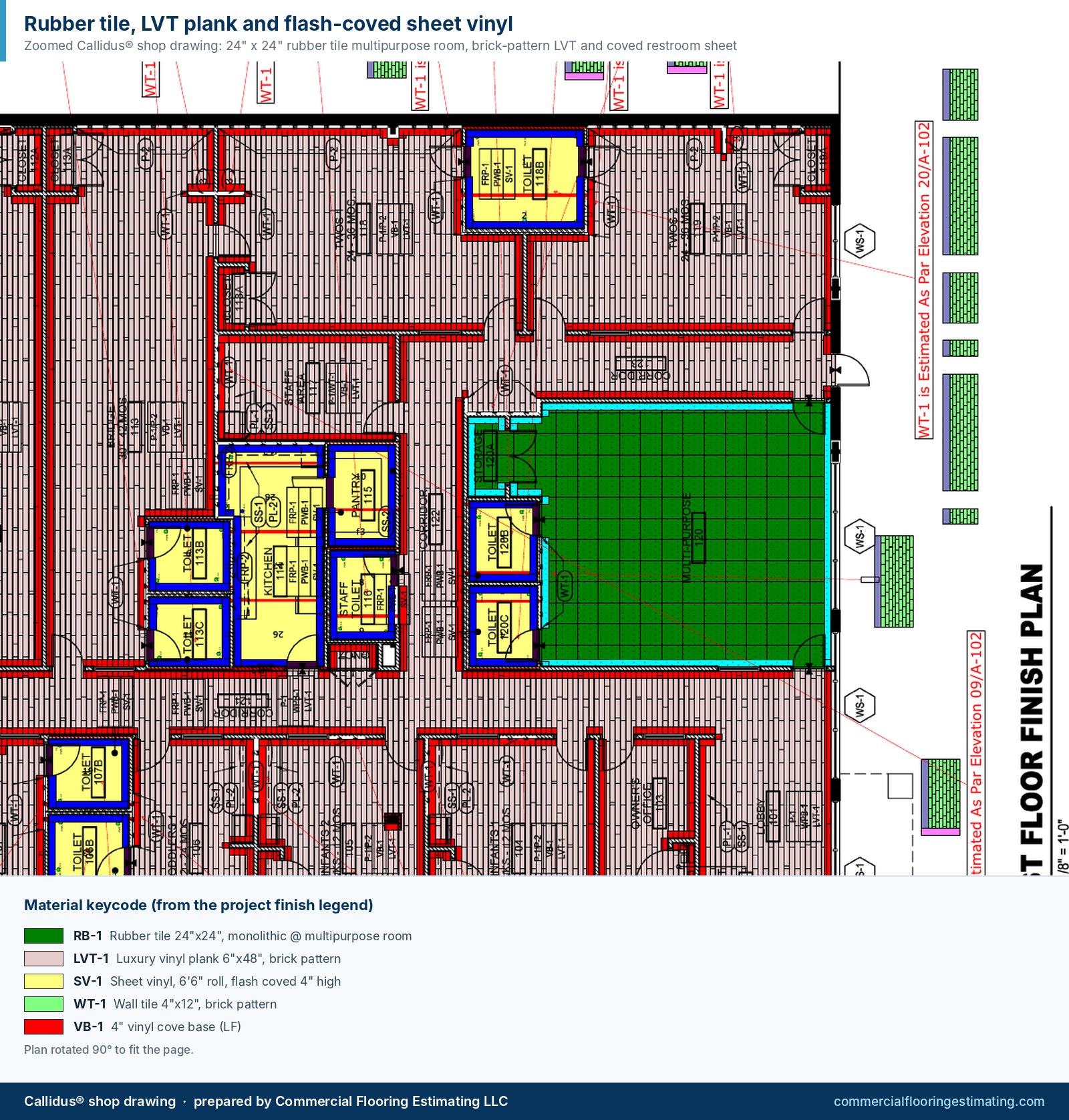
Rubber sheet and tile
Rubber sheet is commonly manufactured in rolls around 4 feet wide, so a roll layout is needed to find the gross quantity, as with other sheet goods. Rubber tile is laid out like other tile, with waste set by size, pattern and room shape. Fitness and athletic rubber can come as heavy rolls or interlocking tiles, often with a required thickness that changes product weight and freight.
How are rubber stairs estimated?
Stairs are counted, not just measured. For each stair run, the takeoff records:
| Item | How it is counted |
|---|---|
| Treads | Number of treads, grouped by stair width, matched to the manufacturer's stock lengths. |
| Risers | Number of risers and their height and width. |
| Integrated tread-riser units | Counted per step when the product combines both. |
| Landings | Square feet of landing tile or sheet. |
| Stringers / skirts | Linear feet if the specification includes them. |
| Visually impaired strips | Noted when contrasting nosing strips are required. |
Mismatched tread widths are a common estimating error. A 5-foot-6-inch stair cannot use a 5-foot tread, so it moves to the next stock length and the offcut is lost.
Rubber base
Rubber wall base appears on almost every commercial flooring bid. It is measured in linear feet by height and type (straight toe for carpet, cove toe for resilient floors), with inside and outside corners counted where preformed corners are specified. See wall base and transitions takeoffs for details.
What a CFE rubber takeoff includes
- Net and gross SF of rubber sheet and tile by product
- Stair counts: treads, risers and landings by stair and width
- Rubber base LF by height and toe type
- Transitions and reducers between rubber and adjacent floors
- Adhesive and welding notes from the specification
Frequently Asked Questions
How do you estimate rubber stair treads?
Count the treads on each stair run, group them by stair width and match each width to the manufacturer's available tread lengths. Count risers and landings separately.
How wide are rubber sheet flooring rolls?
Many commercial rubber sheet products are about 4 feet wide, though widths vary by manufacturer. Confirm on the product data before laying out the rolls.
Is rubber base measured in linear feet?
Yes. Rubber base is measured in linear feet by height and type, with corners counted when preformed corners are specified. It is ordered in coils or 4-foot pieces depending on the product.
Do you estimate gym and fitness rubber flooring?
Yes. We measure fitness rubber rolls and tiles, including thickness and any specified underlayment, for gyms, workout clubs and recreation centers.
How is rubber tile different from rubber sheet?
Rubber tile comes in modular squares, often 24" x 24", and is laid like other tile. Rubber sheet comes in rolls and needs a roll layout with seams, so its waste is driven by roll width.
Are rubber stair treads priced per tread or per foot?
Usually per piece, by stock length. Count each tread, group by stair width, and match to the manufacturer's lengths; risers and landing tile are separate items.
Need this takeoff done for your next bid?
Send your plans and specs. Most CFE takeoffs are completed within 24–48 business hours of receiving complete documents.

Written by
Cristian Valcu – Founder & CEO, Commercial Flooring Estimating LLC
Cristian Valcu is a U.S.-based commercial flooring estimator with over 20 years of experience estimating with Callidus software in the commercial flooring industry. He is an expert in reading and interpreting floor plans, specifications and project-related information, and in producing full takeoff reports with quality material takeoffs based on all available bid documents.
Last updated: